
Last updated November 20, 2026
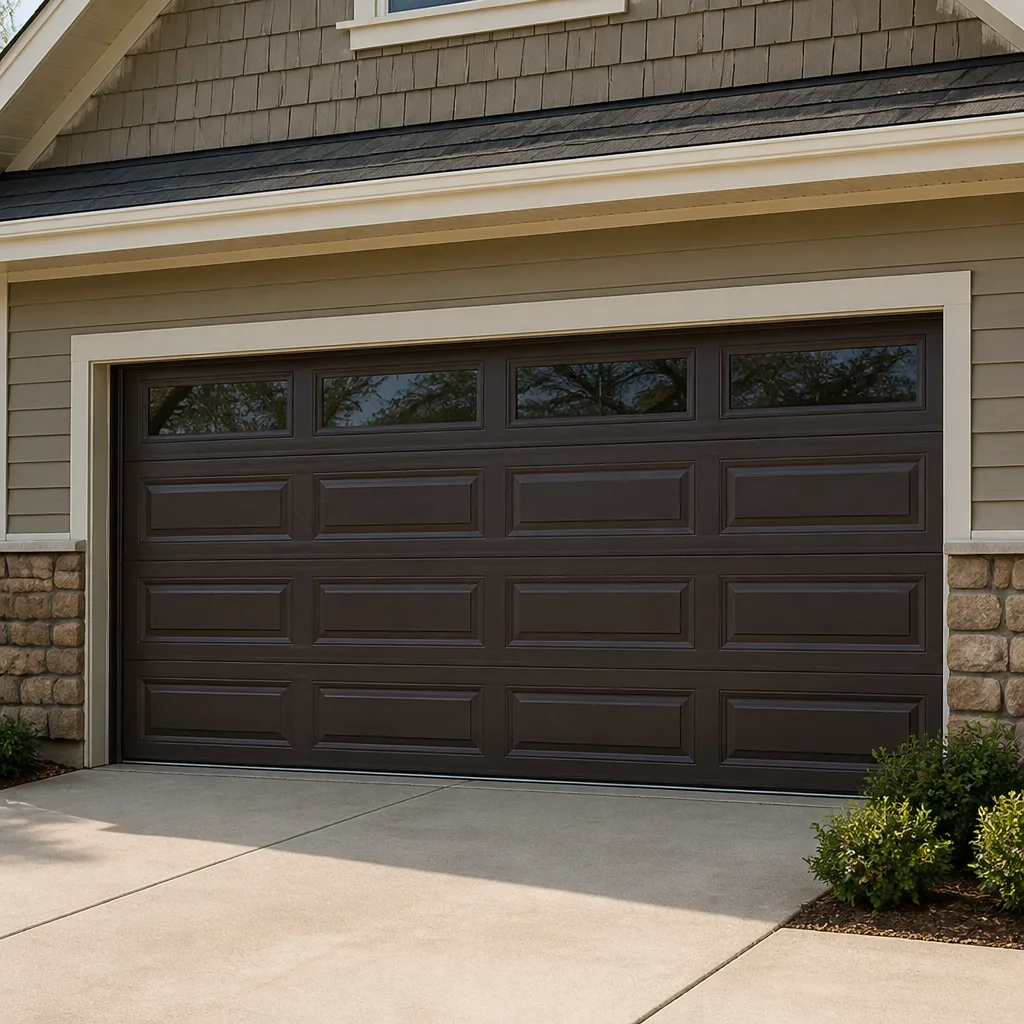 Raised-panel steel
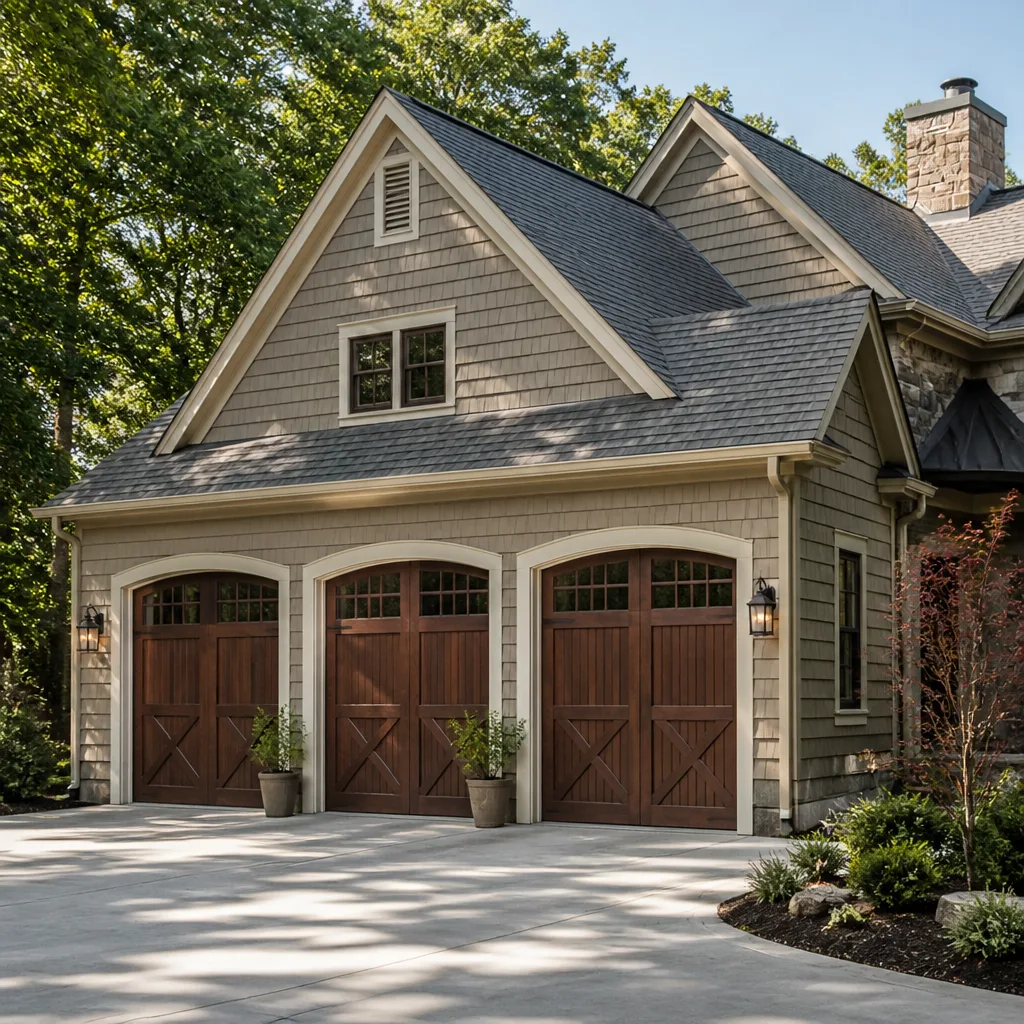 Carriage house
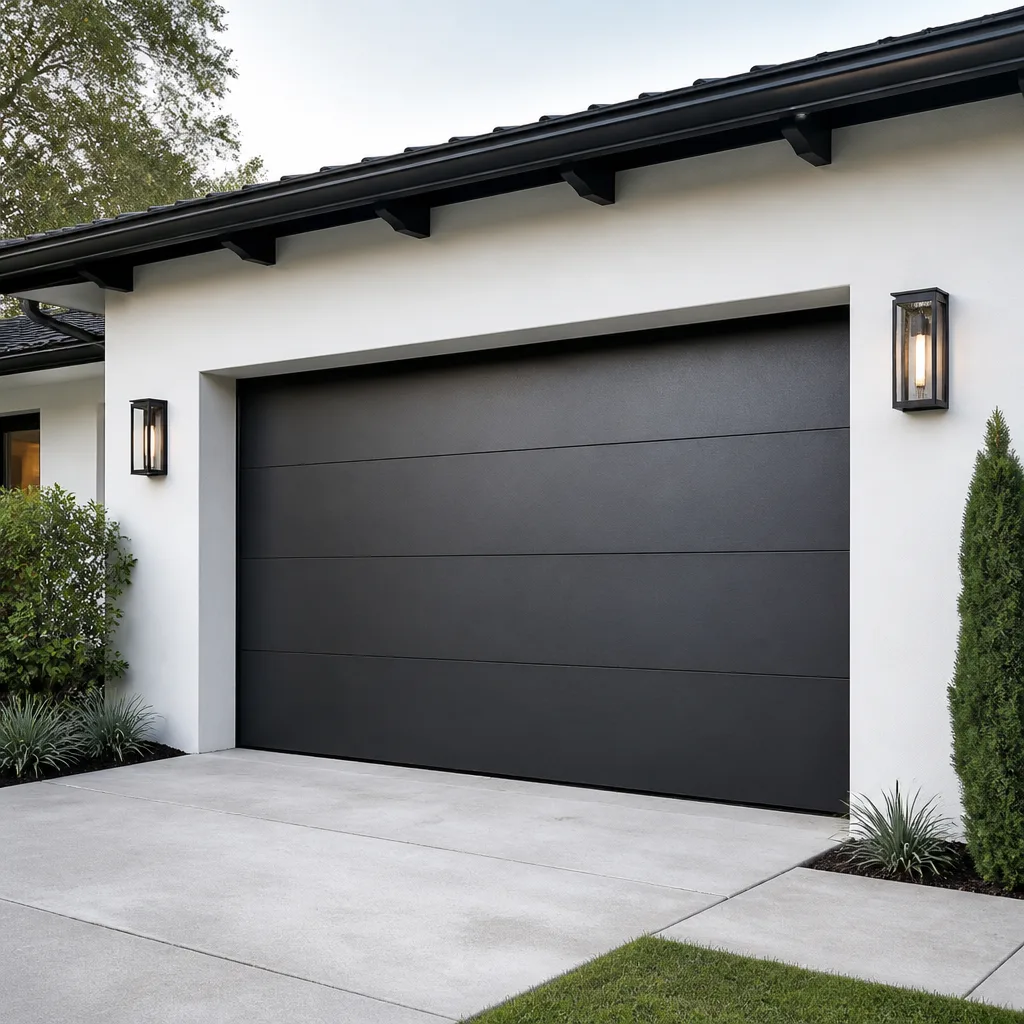 Modern flush
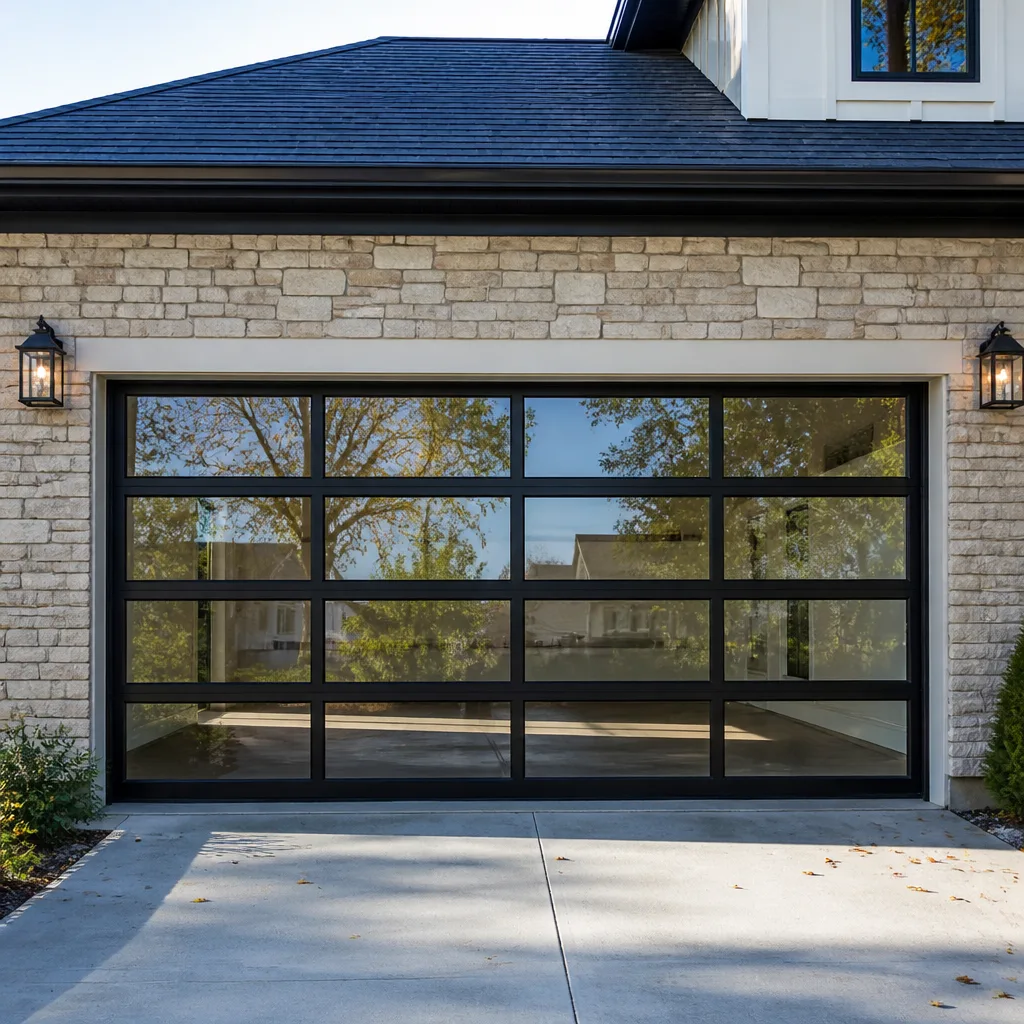 Full-view glass
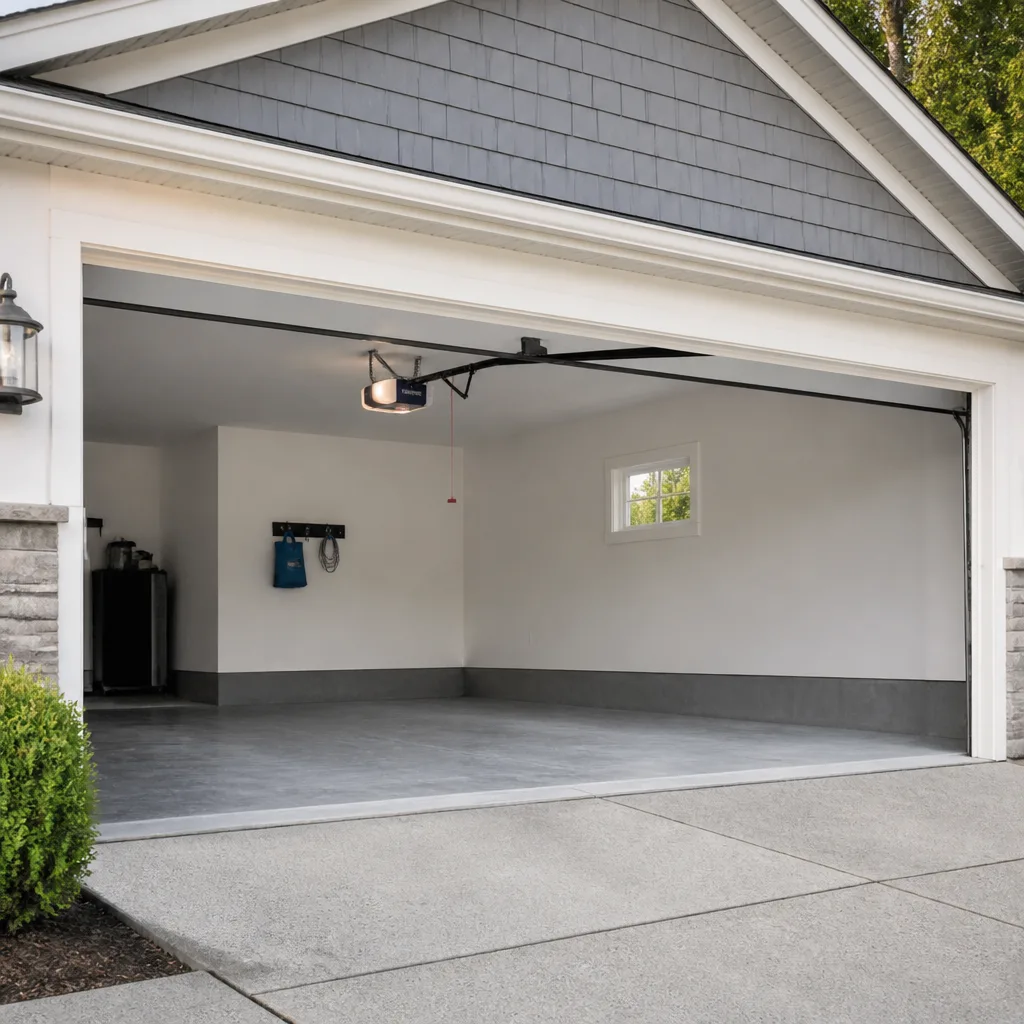 LiftMaster openers
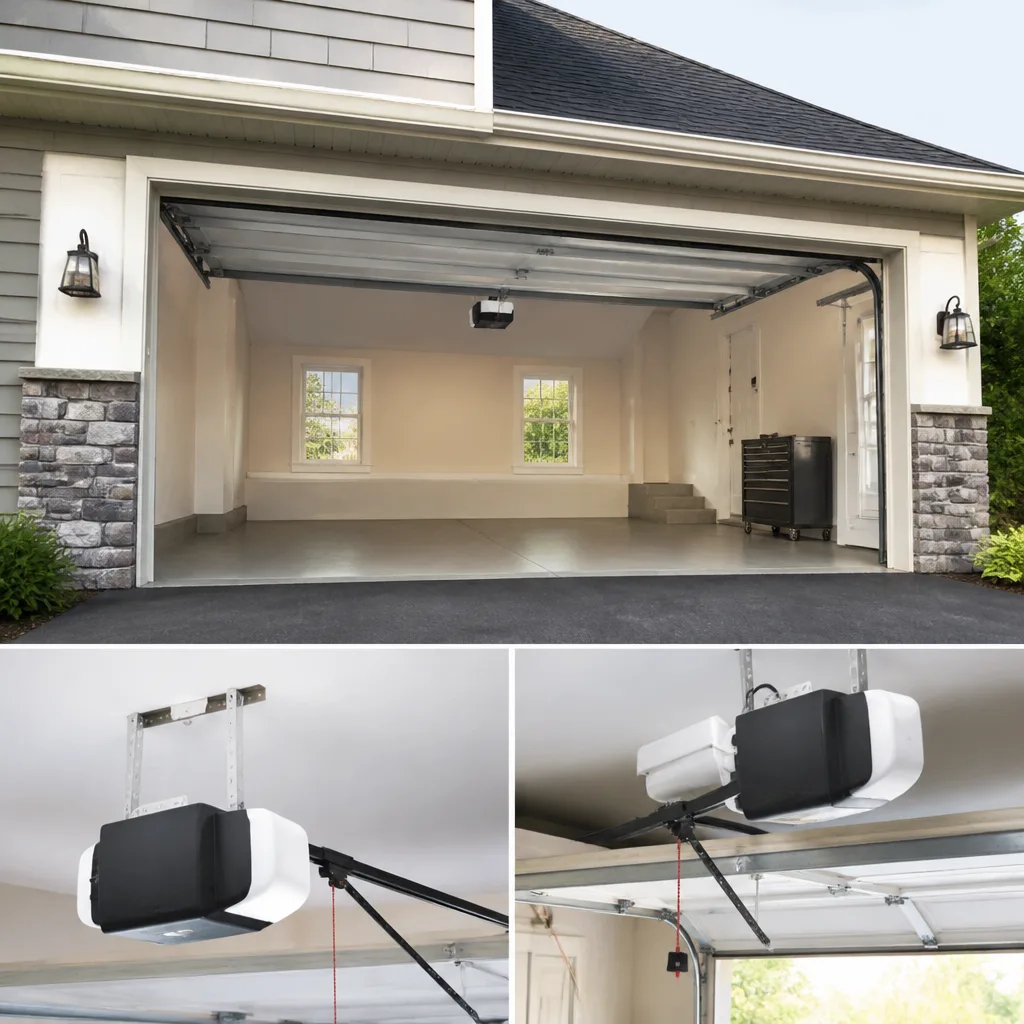 Chamberlain openers
Full 25-point door and opener safety check with every visit - springs, cables, rollers, tracks, and your LiftMaster or Chamberlain opener included
You get a price before we start. It does not change when the pro arrives.
Get your free estimateGarage Door Repair Troubleshooting in Irvington: Common Problems and How to Fix Them
Your door isn’t “broken” – it’s telling you exactly what failed. The beep pattern on your opener, the gap in your spring, the angle your door stops at: each one points to a specific fix, and misreading it is how a small cable job turns into an expensive misdiagnosis. Most garage door problems fall into one of five mechanical categories, and knowing which category you’re in determines whether you need a cheap part, a pro with spring tools, or a replacement conversation. This guide teaches you to diagnose before you call or spend. We’ll walk through the symptoms Irvington homeowners describe most often, what each one actually means, and where the safe DIY line sits.
Quick Answer
Most garage door failures in Irvington come down to five culprits: a snapped torsion spring, a broken or jumped cable, a misaligned track, a dead or misprogrammed opener, or worn rollers and hinges. You can safely reset an opener, rebalance a door by hand, clear an obstruction, and lubricate moving parts yourself. Spring, cable and track repairs under tension are professional work – the door’s stored energy can injure you badly. Diagnose by symptom first, then decide whether to reset it yourself or call a trained technician.
Styles & brands we work with
- Raised-panel steel
- Carriage house
- Modern flush
- Full-view glass
- LiftMaster openers
- Chamberlain openers
Table of Contents
- The Five Mechanical Categories Every Failure Fits Into
- Symptom-First Diagnostic Tree: Match the Behavior to the Cause
- How to Tell a Spring Failure from a Cable Failure from a Track Problem
- Opener Error Codes and Blink Sequences for Common Irvington Brands
- The Four Things You Can Safely Do Yourself (and the Hard Line)
- Why “Off-Track” Has Three Different Causes and Costs
- When to Call a Professional
- Frequently Asked Questions
The Five Mechanical Categories Every Failure Fits Into
Before you touch a thing, sort the problem. Every garage door fault in Irvington lands in one of five buckets, and the bucket determines both the tool and the price. When you call, being able to say “it opens six inches and stops” instead of “it’s broken” saves a diagnostic visit and gets the right part on the first trip.
- Spring failure. The torsion spring above the door or the extension springs alongside the tracks do the heavy lifting. When one snaps, the door becomes dead weight. Garage door repair for spring failure is the most common call we take, and it’s the most dangerous to attempt alone.
- Cable failure. The steel cables lift the door. When a cable frays, snaps or jumps its drum, the door hangs crooked or wedges. Cables are under the same tension as springs and belong to the same pro category.
- Track and roller failure. Bent vertical track, cracked nylon rollers or worn hinges make the door grind, shake or bind in one spot. This is often a parts problem, not a spring problem.
- Opener failure. Motor, logic board, safety sensors, gear assembly or remote programming. Some opener faults are electrical, some are setup, and the blink code tells you which.
- Balance and hardware failure. Sagging panels, loose hinges, a door that’s heavy to lift by hand. This is usually a tune-up plus hardware, not a rebuild.
Sort your symptom into one of those five categories first. If the door won’t lift and you hear a bang, that’s category one. If it lifts but sits crooked, that’s category two. If it lifts fine but the opener won’t engage, that’s category four. The rest of this guide drills into each one.
Symptom-First Diagnostic Tree: Match the Behavior to the Cause
Irvington homes run the full age spectrum, from early twentieth-century houses with detached garages to newer builds with attached two-car bays. The door you have dictates part of the diagnosis, but the symptom always comes first. Here’s the mapping we use when we walk into a garage, in the order homeowners describe it.
Door won’t open at all
Check the opener first. Is the power light on? Does the motor hum but the door stay put? A hum with no movement usually means a stripped drive gear or a disengaged manual release. No hum at all points to a board, a tripped breaker, or a dead motor. If the motor runs but the door won’t budge, pull the red release handle and try lifting the door by hand. If it lifts easily, the problem is the opener. If it won’t lift, the spring is the problem.
Opens about six inches, then stops
This is a classic symptom with three likely causes: a broken torsion spring (the door has no lift assist and the opener trips on the strain), a misaligned safety sensor (the door reverses as if it hit an obstruction), or an opener travel limit that needs resetting. Open the door by hand with the release pulled. Heavy door equals spring. Light door equals opener or sensor.
Opens but won’t close (or reverses immediately)
Nine times out of ten this is the safety beam. Something is breaking the invisible line between the two sensors near the floor: a spider web, a scuff on the lens, sun glare from an open garage window, or a sensor that’s been nudged out of alignment. A door with dirty sensors will open but refuse to close every single time.
Grinding, squealing or popping
Grinding often means a dry torsion spring, a failing bearing plate or worn rollers. A single loud pop followed by dead weight is a snapped spring, almost every time. Squealing that tracks the door’s travel is usually a dry roller stem or hinge. Greasing hinges and rollers helps; grinding from the spring itself needs a technician.
Shaking, shuddering or rattling
A door that shakes on its way up is pulling unevenly. Loosened hinges, a bent track at the bottom, or a door that’s out of balance. Lift the door halfway by hand with the release pulled. If it won’t stay put, the door is out of balance and the spring tension needs adjusting.
Hangs crooked or wedges in the track
Off-track, in garage door language, means the rollers have left the track. That happens from a snapped cable, an impact to the bottom panel, or a track that’s pulled loose from the jamb. We’ll dig into those three causes below.
How to Tell a Spring Failure from a Cable Failure from a Track Problem
You can identify all three of these from the doorway without touching a thing. Visual checks only. The springs and cables are under enough tension to maim or kill, and a technician uses winding bars and a controlled procedure to release that energy. Do not attempt to remove, cut, loosen or adjust a spring or cable yourself.
Visual check: the spring
- Look at the torsion spring above the door. A healthy spring is one continuous coil. A snapped spring shows a clear gap of two or more inches somewhere in the coil, or the whole spring has lost its coil shape.
- On older doors with extension springs running alongside the tracks, look for a spring stretched out to nearly straight, or a spring hanging loose with its safety cable doing its job.
- Listen for the bang. A spring failure is loud enough to hear from inside the house.
- Check the door’s weight. Pull the manual release and lift. If the door feels like it weighs a hundred and fifty pounds, the spring is gone.
Visual check: the cable
- Follow each cable from the bottom bracket up to the drum at the top corner. A frayed cable shows visible strands or a kink. A snapped cable is missing entirely on one side.
- Look at the bottom corner brackets. A cable that’s come off its drum often leaves the door hanging low on one side.
- A snapped cable usually still leaves one side of the door functional, so the door sits crooked – that’s your signature.
Visual check: the track
- Look at the vertical track that runs from the floor up the wall. Is it straight, or has something bent it inward or outward?
- Check the horizontal track at the top. A track pulled loose from its hanger brackets will sag.
- Look at each hinge and roller on the door. Worn or cracked rollers won’t ride the track cleanly, even on straight rails.
The overlap case is common: a snapped cable drops the door suddenly, and the sudden shock snaps the track or cracks a panel. When we arrive at an Irvington home with one spring broken and one still under tension, we never replace just the one. A matched pair gets replaced together, because the second spring has the same wear on it and the same tension ready to let go. That’s worth knowing before you get a quote.
Opener Error Codes and Blink Sequences for Common Irvington Brands
The opener is telling you the fault in code. Chamberlain, LiftMaster, Genie and Craftsman units cover a big share of the garages in Irvington, and each one blinks a diagnosis onto the LED. Get to know your unit before the door quits, and you’ll be able to name the problem before you pick up the phone.
Chamberlain and LiftMaster
These two share a platform and the same diagnostics. The diagnostic LED on the motor housing blinks in a repeating count, and each count maps to a specific fault.
- 1 blink, pause, 1 blink: Safety sensor blocked or misaligned. The line of sight between the two sensors near the floor is broken.
- 3 blinks, pause, 3 blinks: The door opener can’t move the door freely. This often means a spring or cable is hindering travel, or the manual release is disengaged.
- 4 blinks, pause, 4 blinks: The door is binding. Look at the track and the panel alignment.
- 5 blinks, pause, 5 blinks: The opener motor or logic board has a problem, and the manual release should be pulled to free the door.
- 6 blinks, pause, 6 blinks: The remote needs reprogramming, or the wall control is sending a continuous signal.
Genie
Genie units tend to run a rapid blink sequence on the wall control or the motor. A single blink repeated with a pause in between usually means an obstruction or a sensor problem. Three short blinks is often a force-setting issue – the door has hit resistance the opener doesn’t expect, and the opener shuts down for safety. Six blinks on Genie often points to a circuit board fault or a limits-travel problem.
Craftsman and legacy units
Craftsman openers – many still running in older Irvington homes – share a serial family with Chamberlain and use similar blink codes. A steady blinking LED on a Craftsman often means the safety sensors are out of alignment or the wire to one has been chewed by a mouse in the garage. Check the sensor wires that run from each sensor back to the motor head; a loose or damaged conductor is one of the more common causes.
If you’re running a newer smart-home opener (LiftMaster and Chamberlain both fit the bill), the app will often show you a light code or an error name before the panel does. Power the unit off at the breaker, wait thirty seconds, power it back on, and see whether the code returns – a code that clears is a transient; one that repeats is a fault. For garage door opener repair, we work on all four of these opener families and don’t turn away a unit because it’s older or not smart.
The Four Things You Can Safely Do Yourself (and the Hard Line)
Some repairs are genuinely yours to make, and we’d rather you spend the money on the things that matter. Here’s the four-step self-check we walk Irvington homeowners through on the phone. These are safe, reversible and don’t involve touching anything under tension.
Safe DIY step 1: Reset the opener at the breaker
- Locate the breaker that feeds the garage and switch it off.
- Wait a full thirty seconds – some boards need the capacitor to drain.
- Switch the breaker back on and test the wall control.
- If the door works, the fault was a power glitch or a lockup. If the code repeats, it’s a real fault.
Safe DIY step 2: Clean and realign the safety sensors
The two sensors near the floor should face each other and each have a solid LED on. If one LED is off or blinking, wipe the lens with a clean cloth, check that nothing (a stack of boxes, a leaf, a bag of topsoil) is breaking the beam, and gently adjust the sensor until both LEDs are steady. Sun glare from a window shining on the receiver can also trip it. A cardboard shade helps in some garages.
Safe DIY step 3: Clear the manual release and rebalance by hand
If the door is stuck mid-travel, pull the red release handle and lift the door by hand. A well-balanced door will sit still at any point. A door that slams down when pulled is out of balance and needs a technician. When you re-engage the release, run the door through a full cycle to make sure the carriage re-latches.
Safe DIY step 4: Lubricate hinges and rollers
A garage door spray lubricant on the roller stems, hinge pins and the torsion spring coil quiets the most common squeaks. Run the door up and down a couple of times after lubricating. Skip the tracks – those are meant to be clean and dry.
The hard line
Here’s the line. Springs, cables and anything that involves releasing the tension in the system are professional only. The torsion spring holds the full weight of the door, often a few hundred pounds of stored force, and the wrong move with a winding bar or the wrong tool sends it through a hand. Cable drums, bottom brackets and the center bearing plate fall on the same side of the line. So does any attempt to straighten a bent track with the door under tension. A homeowner can save real money by diagnosing and resetting small things. Nobody should lose a finger saving eighty dollars.
Why “Off-Track” Has Three Different Causes and Costs
“My door came off the track” sounds like one problem. It’s actually three, and the repair bill looks very different depending on which one you have. The three causes share a symptom – a door that’s stuck and looks hung up – but the fix runs from a bracket adjustment to a full panel replacement.
Cause 1: track pulled loose from the jamb
The mounting brackets pulled out of old wood, or a bolt worked loose over years of vibration, and the track has moved an inch or so. The rollers popped out because the gap opened. This is usually the cheapest fix. The technician re-secures the bracket, straightens the track, resets the rollers and checks the door’s alignment. On an older Irvington home with a wood-framed garage, the wood itself may need a reinforcing plate before the bracket gets bolted back.
Cause 2: impact damage to the bottom panel
A car nudged the door, or a bicycle hit it, and the bottom section bent enough to drop a roller out of the track. If the bottom panel is bent, straightening it will never restore it to a clean rolling shape. The panel usually has to be replaced, and on some brands that means a matching panel order. We supply parts for Clopay, Amarr, Wayne Dalton, Raynor and the other brands we service, so a panel replacement doesn’t stall waiting on a third-party vendor. That’s the point of carrying part sourcing in the same business as the repair – the job keeps moving. And if a new panel is the better value than a repair on a well-worn door, we’ll say so and walk you through garage door installation instead.
Cause 3: a snapped cable dropped one side
The door suddenly dropped on one side, the roller popped out and the whole door wedged. This looks like a track problem but the cause is a cable. Replacing the cable and then resetting the door to its tracks is the job. Do not force the door back into the track and run the opener – that’s how a repairable door becomes a panel replacement, or worse, a door that falls.
Three symptoms, three causes, three price points. Distinguish them by looking for the loose bracket, the bent panel or the snapped cable before you call. That one look saves the diagnostic step and gets the right part ordered first time.
When to Call a Professional
Call when you can’t see the cause, or when the cause is on the hard-line side of the list. Specifically, call us when: the door won’t lift by hand with the release pulled, you see a gap in the torsion spring or a snapped cable, the door is hanging crooked or wedged in a track, the opener throws a blink code that won’t clear after a reset, or the door has come out of the track and you can’t safely free it. Those are the situations where the diagnosis is already done. We’d rather you spend the call confirming it than spend the afternoon guessing.
Irvington Garage Door Repair Pros offers free estimates across Irvington – call (833) 468-3082. We answer 24/7. Fast dispatch from 7am to 7pm, Sunday through Friday. Our technicians have up to 15 years of experience, and the price is quoted and agreed before any work starts, so the number on the estimate is the number that stays on the invoice.
See the difference
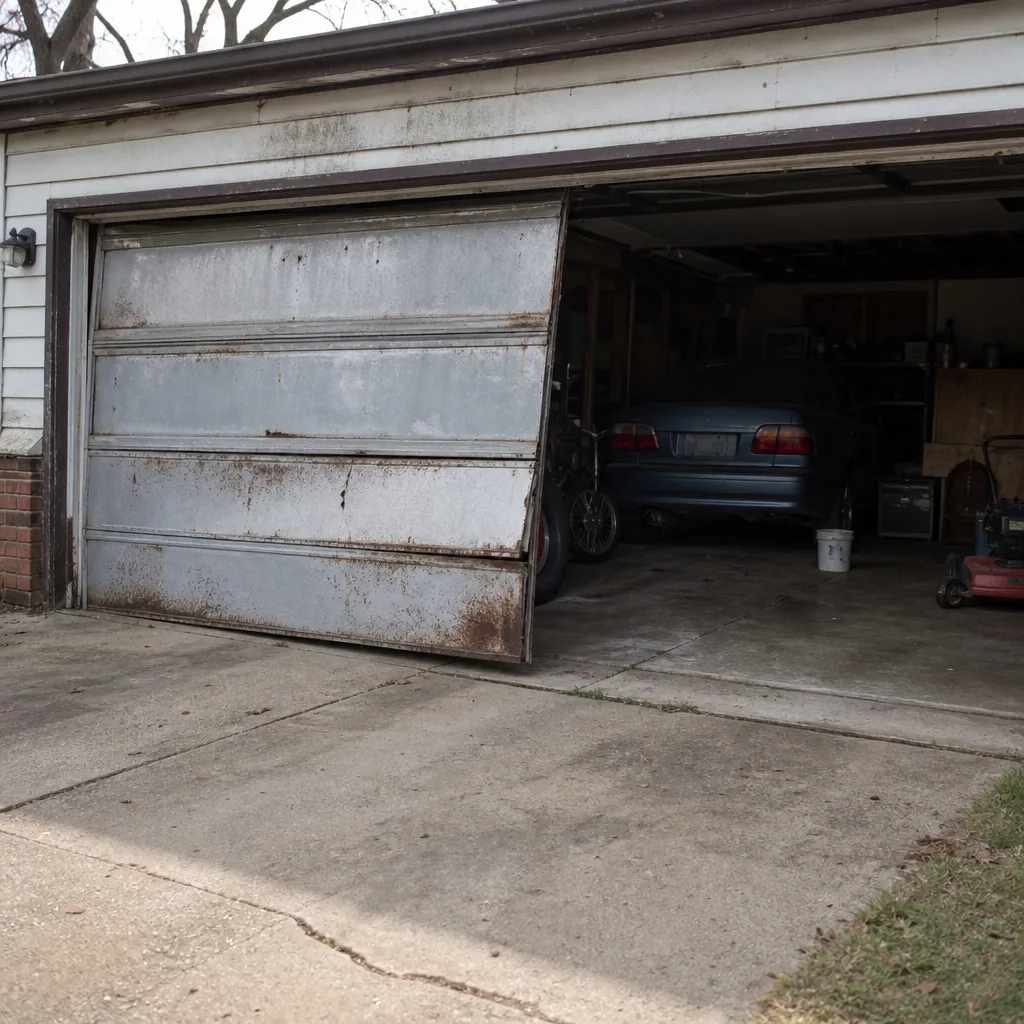 Before
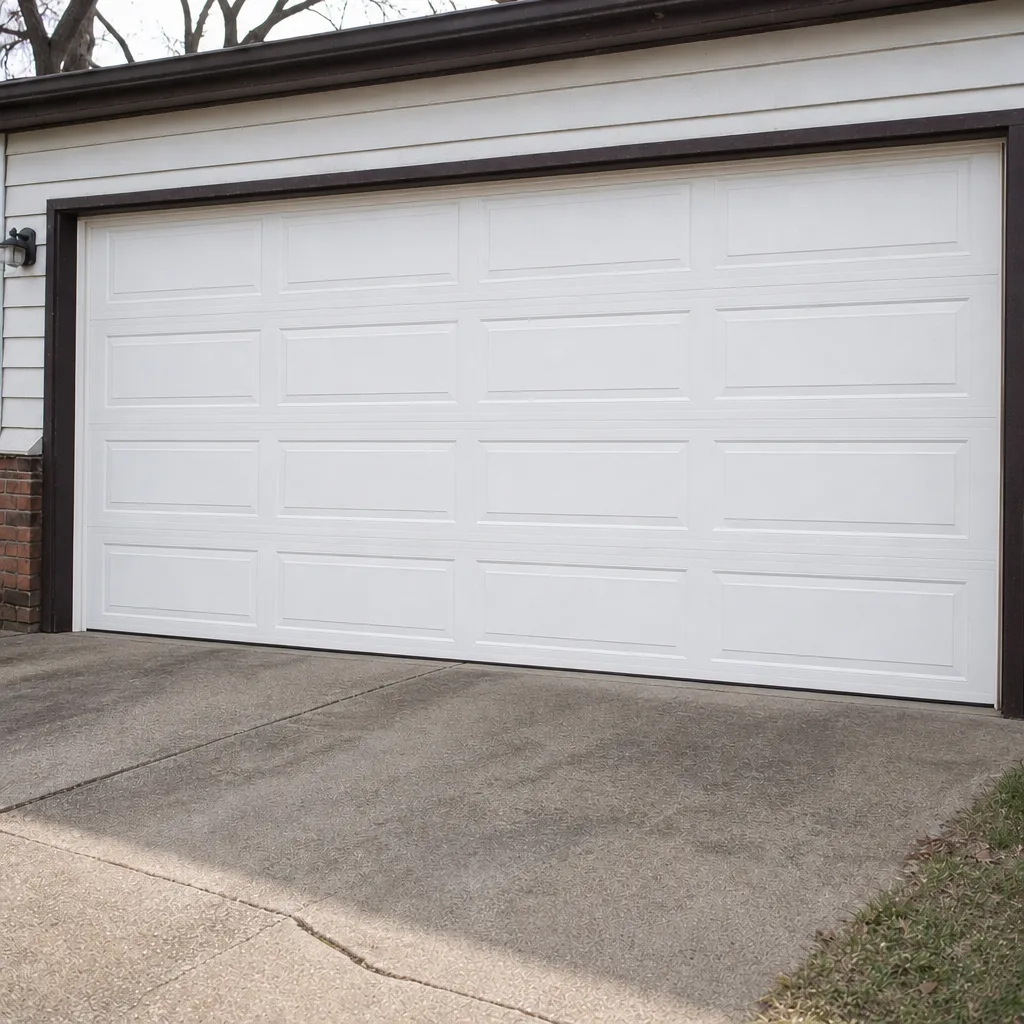 After
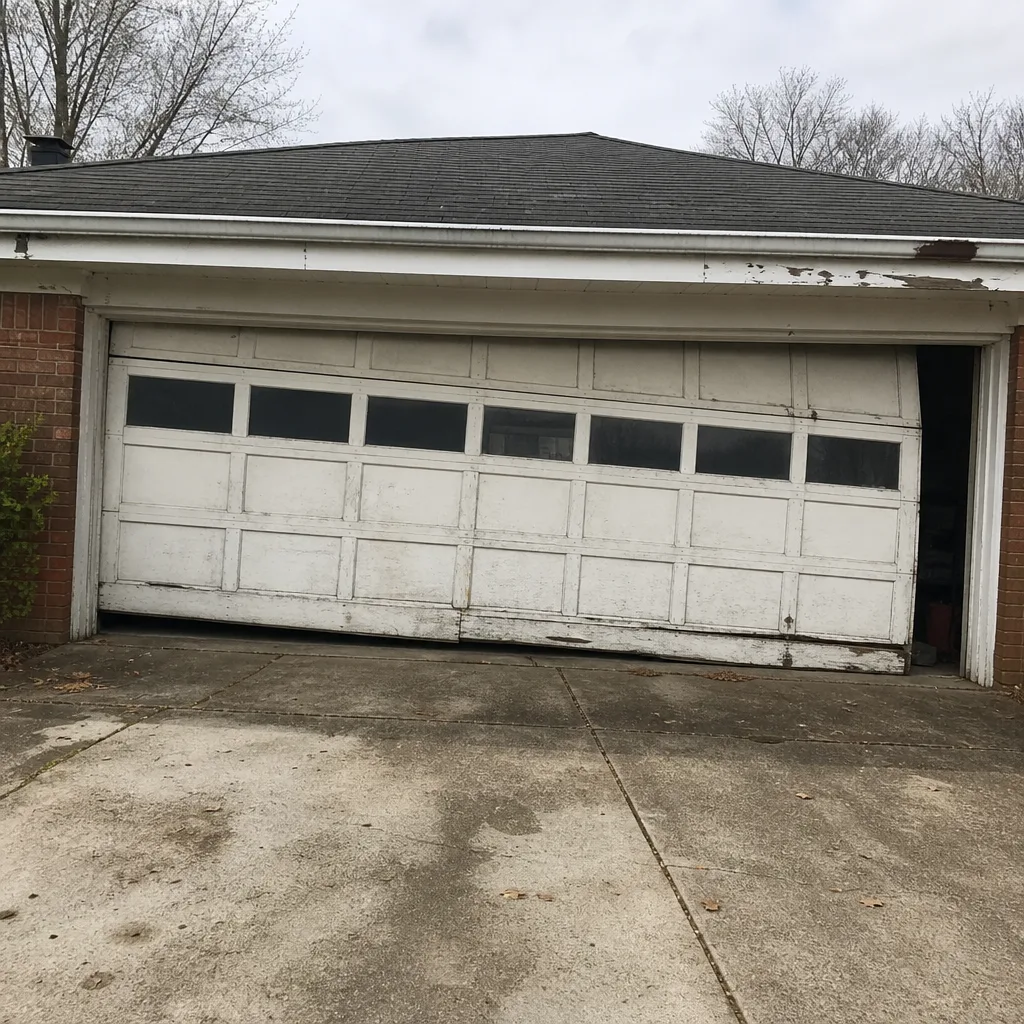 Before
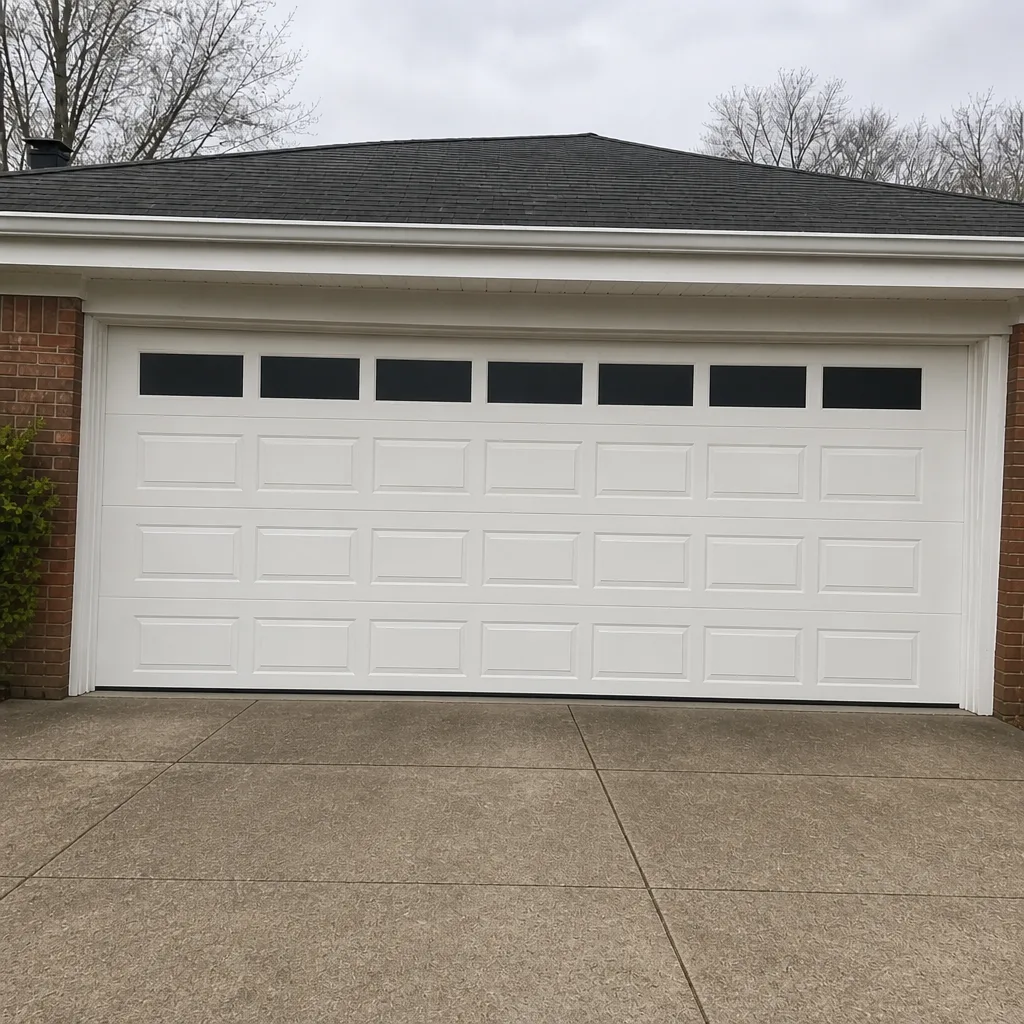 After
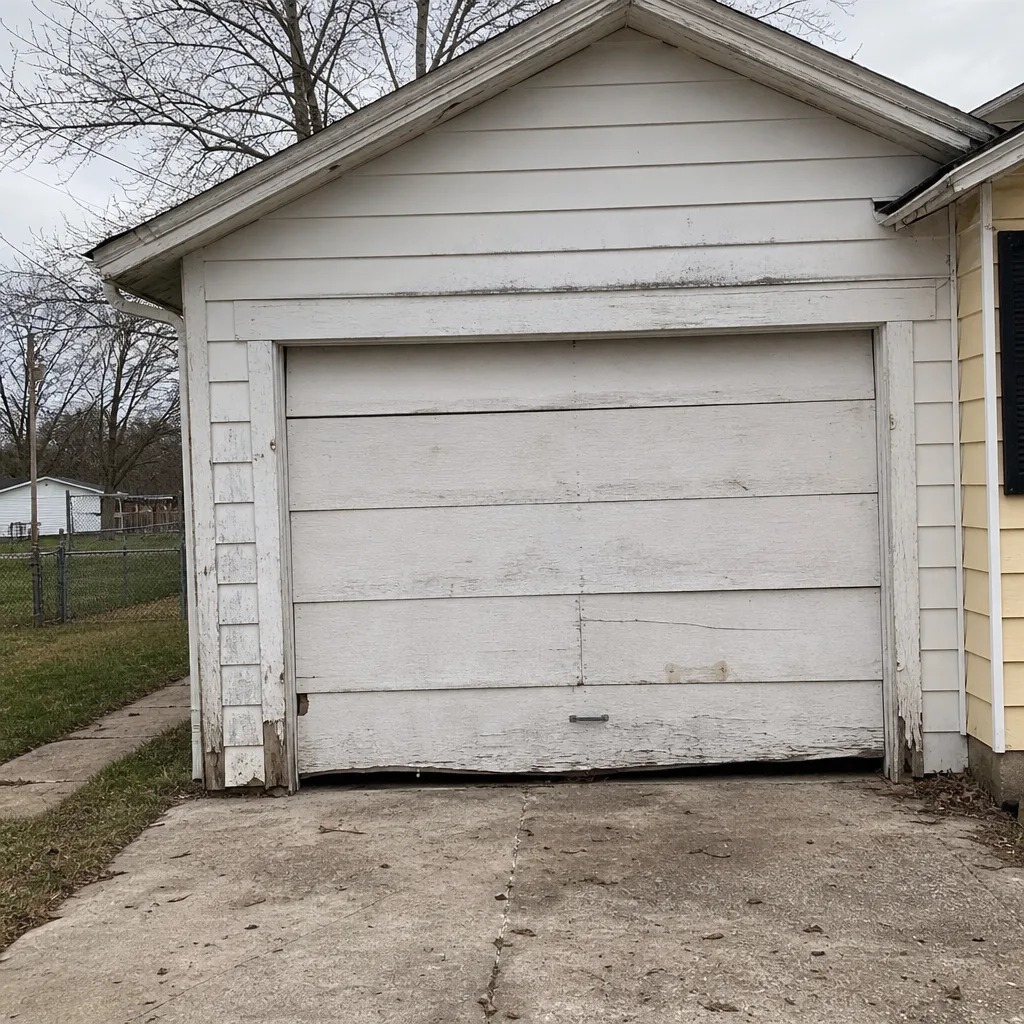 Before
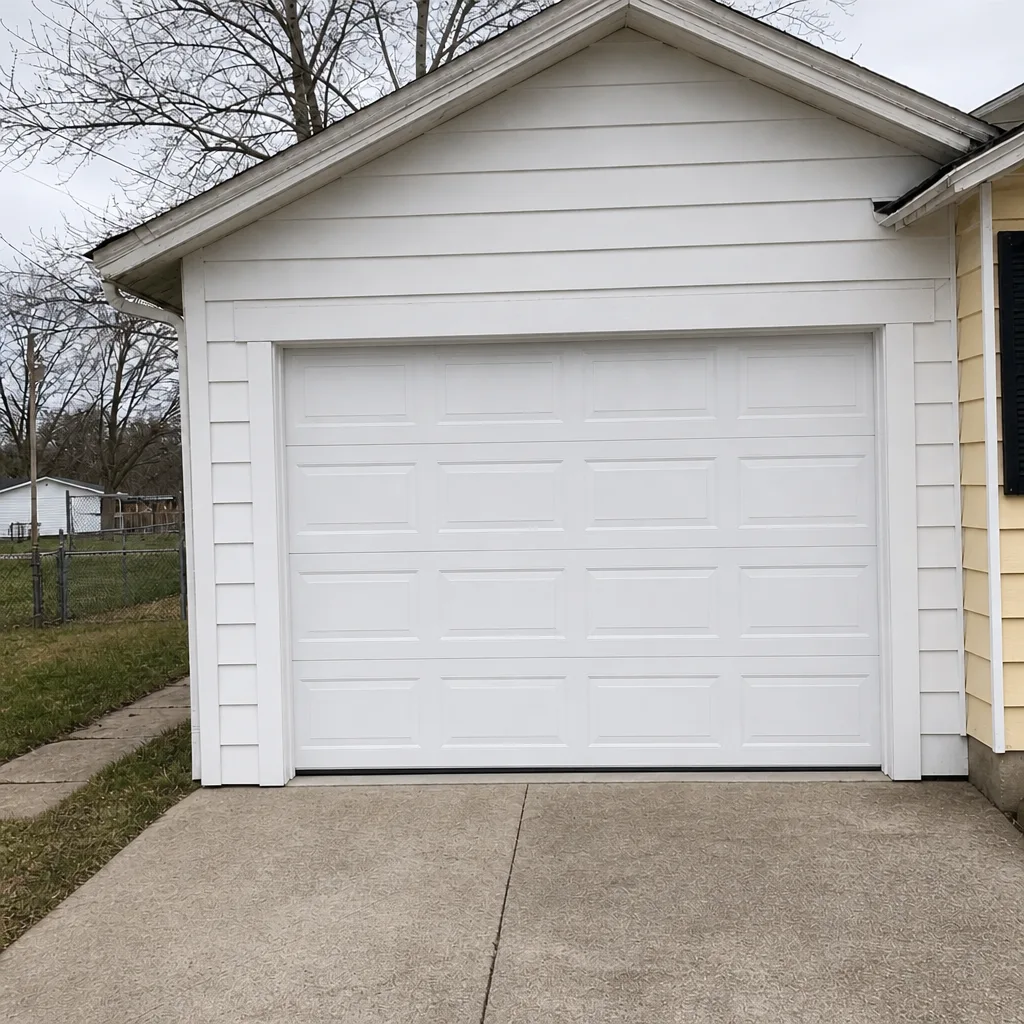 After
Common Mistakes to Avoid
- Forcing an opener on a dead door. If the spring is broken, the opener is trying to lift the full weight of the door with a motor built for a fraction of it. Run it more than a couple of cycles and you’ll burn out the gear or the board on top of the spring repair.
- Replacing one torsion spring instead of the pair. The two springs have identical wear. The second one is on borrowed time, and the door is out of balance the moment it fails. Plan for a pair.
- Assuming a blink code means a new opener. A large share of “the opener is dead” calls end with a sensor alignment, a programming reset or a stripped gear – all repairable on the unit you already own.
- Greasing the tracks. Tracks are meant to be dry so the rollers roll. Oil on the rails collects grit and makes the door grind worse over an Irvington winter.
- Ignoring a slow, noisy door until it fails. Grinding and shuddering are the door asking for a tune-up. A tune-up costs far less than the panel and track repair that follows a failure mid-cycle.
- Hiring a generalist for spring work. Springs are a specific skill with specific tools. Choose a company that names spring repair as a service, not one that treats it as a line item on a general handyman list.
- Running the door after it’s come off the track. A wedged door that runs one more cycle can drop a panel on a car or a person. Stop, disengage, call.
Frequently Asked Questions
Most residential garage door repairs in Irvington land between $150 and $450 depending on the part and the labor. A single torsion spring is typically $150 to $300, and a matched pair runs roughly double that because the springs get replaced together. Cable replacement is usually $120 to $250. Opener diagnostics and repair vary more by unit. The estimate is free, and the written quote sets the final price before any work starts. Call (833) 468-3082 for an exact quote – estimates are free.
Often, yes. We dispatch Sunday through Friday, 7am to 7pm, and same-day repair is common for spring and opener calls. A call outside dispatch hours gets booked into the next opening. Call (833) 468-3082. We answer 24/7. Fast dispatch from 7am to 7pm, Sunday through Friday.
No. We quote and agree the price before any work starts, and the written estimate is what you pay. If we open the door and find something additional – a cracked panel behind a broken spring, for example – we stop, explain it, and get your approval on the revised quote before we touch it. You’ll never get a surprise invoice.
The local pro we connect you with is licensed and insured as their state requires. We work with independent local professionals, and we’ll confirm the credentials on the job before work starts. Call (833) 468-3082 for details on your specific job.
A six-inch stop almost always points to one of three causes: a broken torsion spring, a misaligned safety sensor, or an opener travel limit that needs resetting. Pull the manual release and try lifting the door by hand. If it’s heavy, it’s the spring. If it lifts easily, it’s the opener or the sensor. Call (833) 468-3082 to book a diagnosis.
No. Torsion and extension springs hold the full weight of the door under tension, and a spring released without the right tools and procedure can cause serious injury. This is the one repair in the garage that should always go to a trained professional. Call (833) 468-3082 for spring repair and a free estimate.
The Bottom Line
Diagnose before you call or spend. Sort the symptom into one of the five mechanical categories – spring, cable, track, opener or balance – and the fix and the price point become obvious. You can safely reset an opener, realign a sensor, clear a release and lubricate hinges; you cannot safely touch a spring, a cable or a track under tension. Match the symptom to the cause, watch the blink code, and look before you pull. If the answer is a professional repair, Irvington Garage Door Repair Pros handles spring work, opener diagnostics, track and cable repair, and part sourcing for the brands in your garage. Call (833) 468-3082 for a free estimate. We answer 24/7. Fast dispatch from 7am to 7pm, Sunday through Friday.
For more on the full scope of what we handle, see Irvington Garage Door Repair Pros.
Written by the team at Irvington Garage Door Repair Pros.