
Last updated November 20, 2026
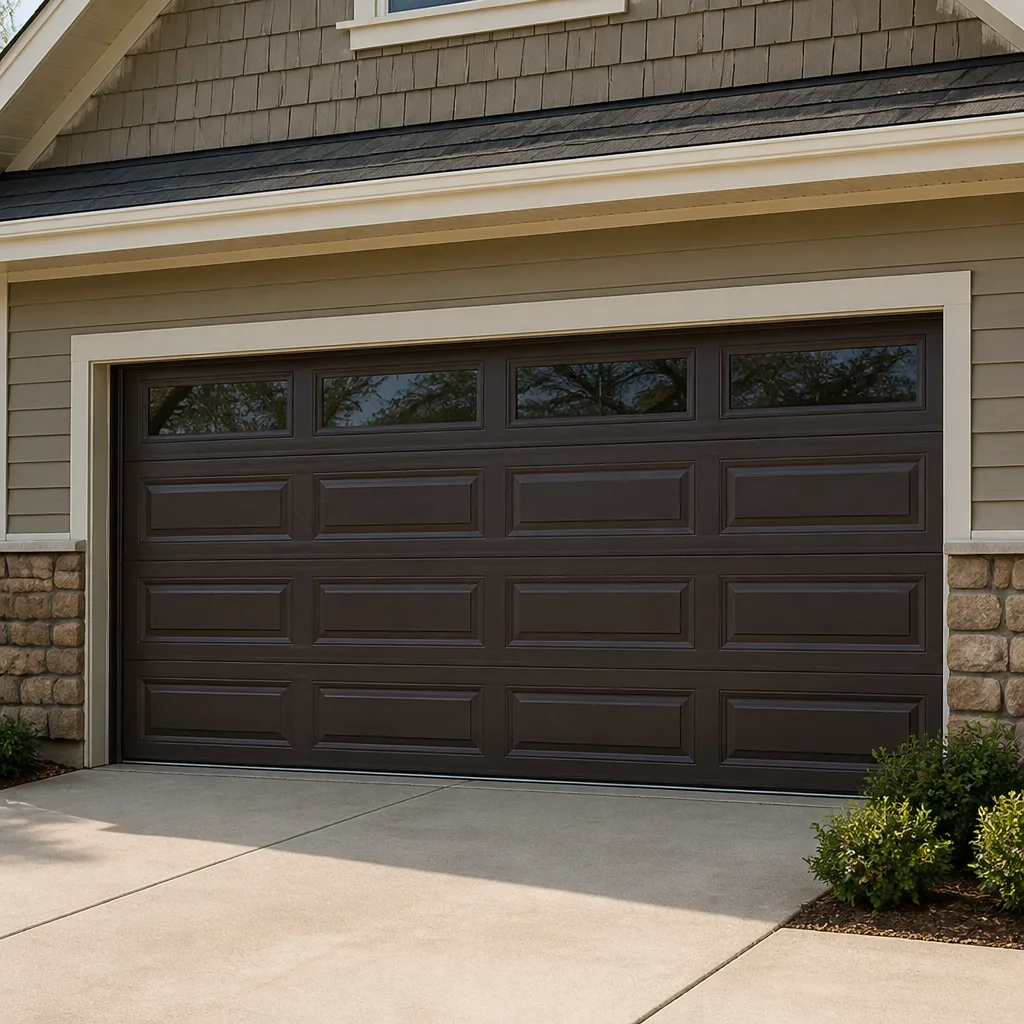 Raised-panel steel
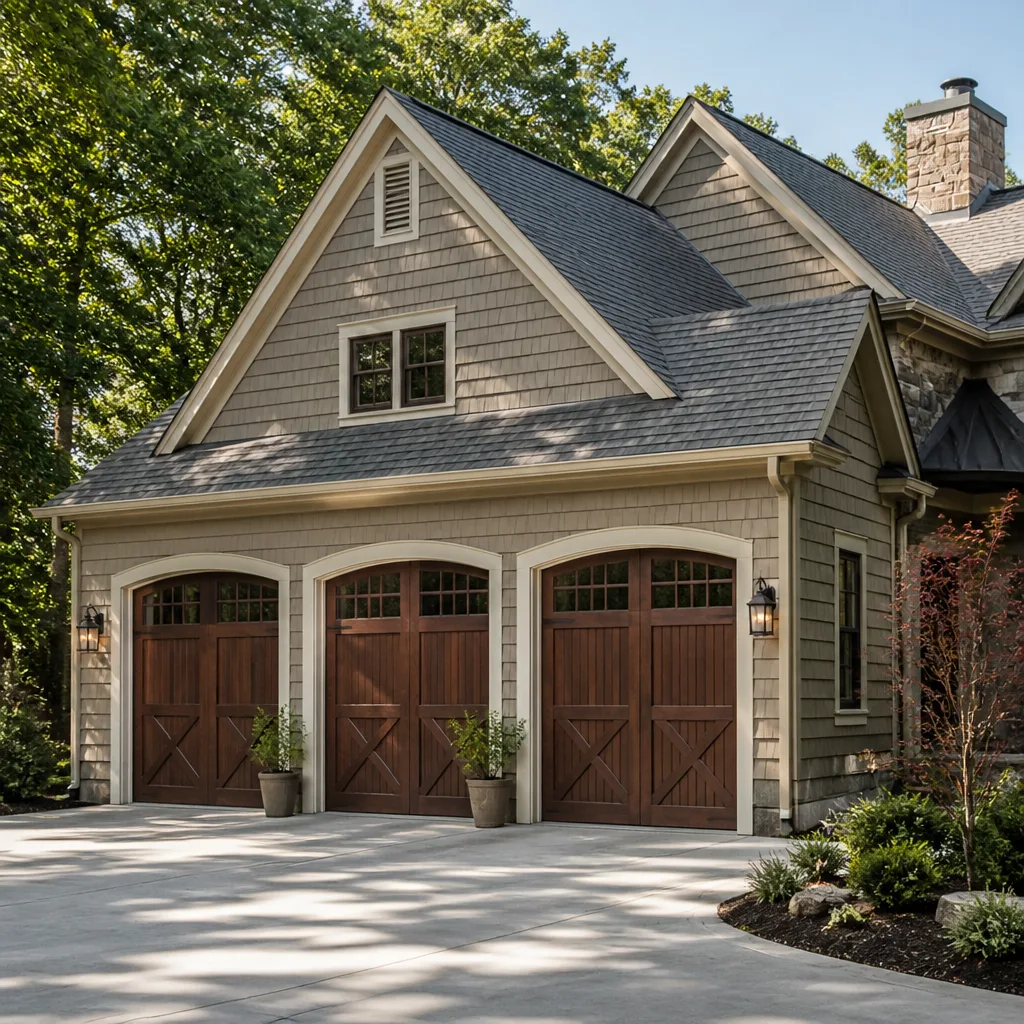 Carriage house
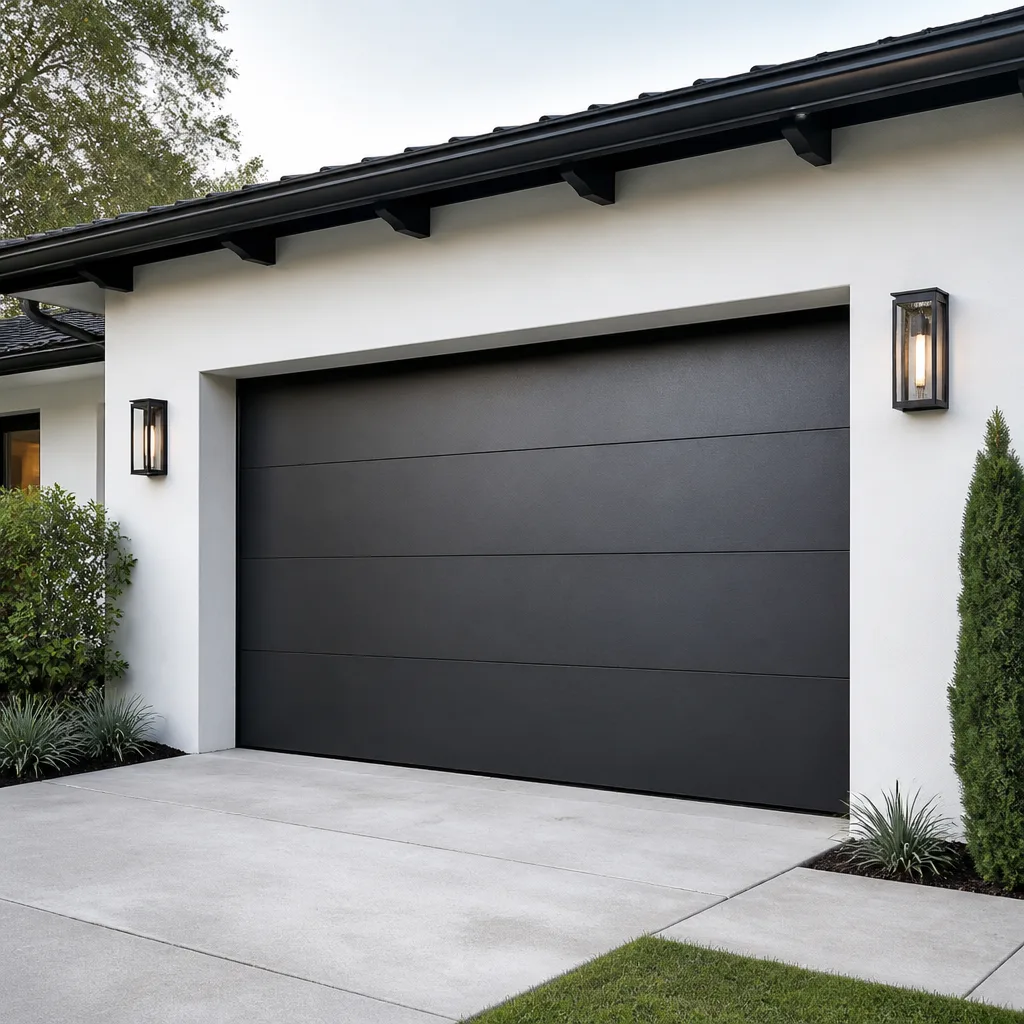 Modern flush
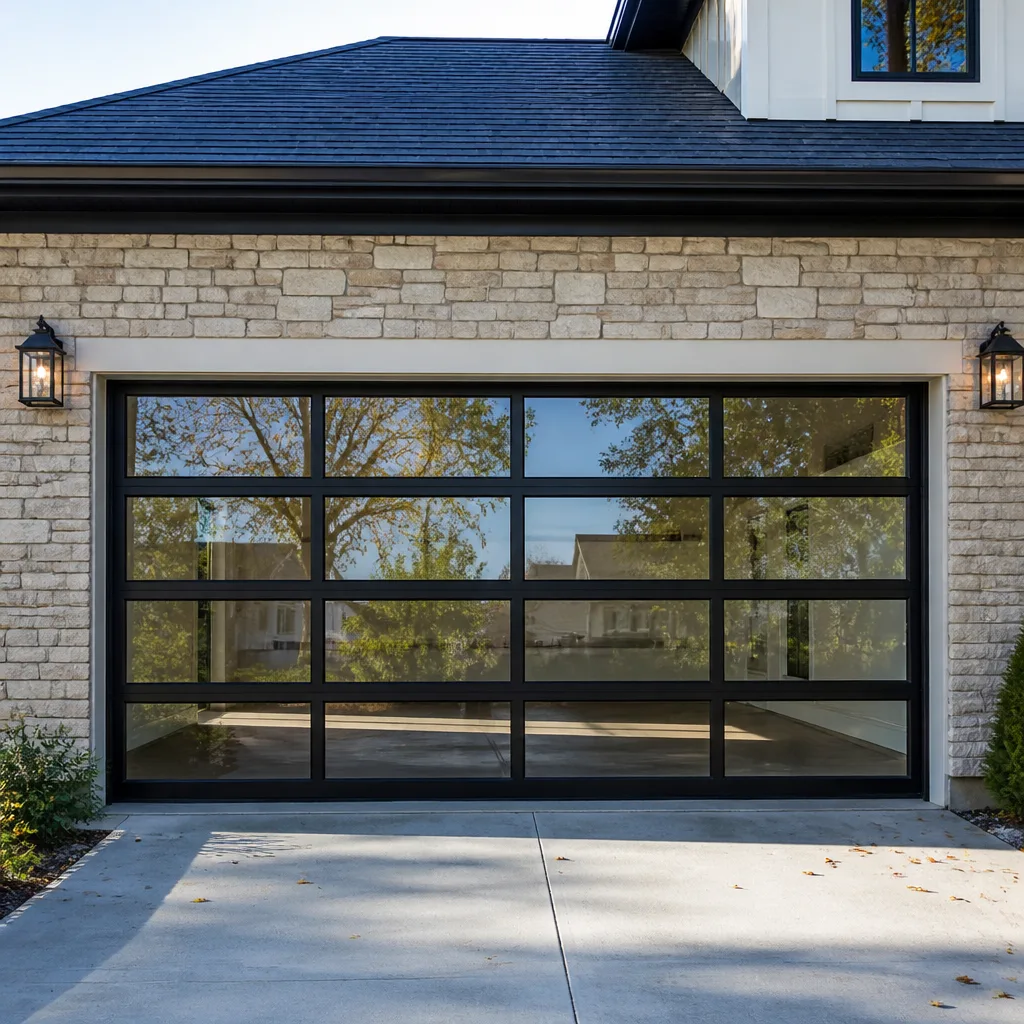 Full-view glass
 LiftMaster openers
 Chamberlain openers
Full 25-point door and opener safety check with every visit - springs, cables, rollers, tracks, and your LiftMaster or Chamberlain opener included
You get a price before we start. It does not change when the pro arrives.
Get your free estimateGarage Door Permits, Codes & Inspections in Irvington, IN: What You Need to Know
Here’s a fact that surprises most Irvington homeowners: replacing a garage door usually needs no permit at all. But the exceptions matter, and they tend to surface at the worst possible moment, which is the closing table. A structural header modification or a brand-new garage opening done without approval can stall a sale, complicate a title search, and raise questions with an insurer long after the work is finished. This guide walks through exactly when Marion County requires a permit for garage door work, which Indiana residential code sections touch doors and automatic openers, how Irvington’s historic character shapes door style approvals, what an inspection actually checks, and how to keep your paperwork clean from installation through resale.
Quick Answer
In most cases, swapping a garage door or opener on an existing opening in Irvington, IN does not require a building permit. A permit is typically required when the work changes the structure itself: widening or raising the opening, cutting a new opening into a wall, altering the header, or changing the framing that carries the load. Anything inside a locally designated historic district, or covered by a homeowners association, may also need design sign-off even when no building permit is triggered. When in doubt, call the City of Indianapolis Department of Business and Neighborhood Services, which handles building permits for Marion County, and ask before the work starts.
Styles & brands we work with
- Raised-panel steel
- Carriage house
- Modern flush
- Full-view glass
- LiftMaster openers
- Chamberlain openers
Table of Contents
- When Does Garage Door Work Need a Permit in Irvington?
- Which Indiana Code Sections Apply to Garage Doors and Openers?
- Historic District and HOA Sign-Off in Irvington
- What an Inspection Actually Checks
- How to Pass Without a Re-Inspection
- How Unpermitted Work Shows Up at Resale
- What Homeowners Can Check and What to Leave Alone
- Common Mistakes to Avoid
When Does Garage Door Work Need a Permit in Irvington?
Garage door work splits into three tiers, and only one of them usually involves a permit.
The first tier is a straight replacement. You take off a door of the same size and put a new one on the same track and springs in the same opening. Same dimensions, same header, same framing. In Marion County this is normally treated as routine maintenance and does not require a building permit. The same goes for replacing an opener, a spring, a cable, a roller or a panel. These are component-level repairs inside an existing structure, and they don’t change the building envelope.
The second tier is a change to the opening. You want a wider door, a taller door, or a different configuration. This means moving a jamb, reframing the sides, and in most cases altering the header that spans the opening. That header is a structural element carrying the wall above it. Work at this level generally triggers a building permit, and it should. The wall above a garage opening carries real load, and the framing has to be sized and fastened to handle it.
The third tier is a new opening where none existed. Cutting a garage opening into a solid wall, converting a carport to an enclosed garage, or adding a garage bay to an existing structure all fall here. Expect a building permit and at least one inspection during the framing stage before the door goes on.
- Same-size door replacement: permit usually not required.
- Opener, spring, cable, roller, panel repair: permit not required.
- Widening or heightening an existing opening: permit generally required.
- Header modification or new framing: permit generally required.
- New opening cut into a wall, or a new garage bay: permit and inspections required.
One local wrinkle matters here. Irvington has a lot of older housing stock, and older garages were sometimes built to dimensions that no current standard door matches exactly. Fitting a current door into an opening framed decades ago can turn a simple replacement into a test of whether the opening’s dimensions match the original nominal size. When that happens, we measure carefully before ordering, because a door that needs a new opening is a different job than one that doesn’t. For straightforward same-size replacement in Irvington, garage door repair generally moves quickly with no permit step at all.
Which Indiana Code Sections Apply to Garage Doors and Openers?
Indiana’s residential building code is built on the International Residential Code, adopted at the state level with local amendments. That matters because the code requirements for garage doors and openers are specific and they show up on inspection reports.
The provisions that come up most often in garage door work:
- Automatic-closing openers and entrapment protection. Residential openers must be equipped with a means to reverse the door on contact with an obstruction, plus a non-contact sensing method, meaning a photoelectric eye near the floor. If your opener lacks either, that’s a code concern whether or not a permit is involved.
- Emergency release. A residential automatic garage door opener must have a manual release that disconnects the door from the operator so it can be moved by hand if the power fails or the mechanism jams.
- Vehicle door in a garage attached to a dwelling. Where a garage is attached to a house, the door between garage and house must be a solid or self-closing door and protected against the movement of carbon monoxide and fumes. This is on the house side, but it’s checked in the same pass.
- Structural framing of the opening. The header over a garage door opening is a beam, and the IRC sets out how it must be sized and supported. When the opening changes, the header provisions become live.
- Electric service to the opener. Altering the electrical circuit that feeds an opener is electrical work and falls under electrical code, not the door provisions. That’s a separate trade and a separate inspection.
What does this mean in practice? If you’re replacing a door on an existing opening, most of these provisions are already satisfied in the door you buy, since residential openers sold today include the required safety features. If you’re changing the opening or the circuit feeding the opener, code provisions apply anew and the work needs to be permitted and inspected. If you’re unsure which category your job falls into, a quick call to the city’s building department before ordering anything saves a lot of backtracking.
We work on the brand you already have, and that includes reading the manufacturer’s installation requirements for an opener’s safety features. Clopay and Amarr door systems are both documented for their track, spring and safety requirements, and those documents are part of the record when an inspection happens. Our technicians have up to 15 years of experience with the major residential brands, and knowing where the manufacturer’s spec and the code intersect is part of the job.
Historic District and HOA Sign-Off in Irvington
Building code isn’t the only approval layer in Irvington. Some properties fall inside locally designated historic areas, and separately, some neighborhoods and subdivisions have HOAs with architectural review rules. These two layers are different from a building permit, and neither is a substitute for the other.
A historic designation protects the historic character of a district. Sign-off is typically handled by a preservation commission or the city’s historic preservation office, and it usually covers visible changes to the exterior of a building. Replacing a garage door facing an alley or a street is often a visible change. That means style, material, panel layout, color and sometimes glazing come under review. A door that satisfies every code requirement can still be turned down by a preservation body if the profile doesn’t match the character of the district.
HOA review is a contract matter between you and the association. Architectural control committees commonly require an application with the door model, color, and sometimes the manufacturer’s specification sheet. Clopay and Amarr both publish product documentation that helps here, and if you’re considering a stucco or carriage-style door, the panel layout drawing is what the committee actually wants to see.
How to approach the approval sequence:
- Ask the city whether the property lies inside a locally designated historic area, and ask your HOA whether architectural review applies.
- Get the historic or HOA design standards in writing before you choose a door.
- Match the door model to those standards, then check that it works mechanically in your opening.
- Submit the design application with product literature and the door’s dimensions.
- Get the approval in writing, then order the door.
- Keep the approval with your records, alongside the door’s receipt and warranty documentation.
The order matters. Choosing a door first and asking for approval second is a common way to eat weeks. Wayne Dalton and similar brand lines publish elevation drawings and panel profiles, and having those in hand when you submit gives a review committee exactly what it needs to approve rather than to ask questions. Need a door spec for a submission? Our garage door installation service documents the model and dimensions as part of the job.
What an Inspection Actually Checks
If your job requires a permit, an inspection is the step that closes it out. Inspectors are looking at a defined list, and knowing the list is the difference between a clean sign-off and a second visit.
For a structural or new-opening job, inspectors typically check the following:
- Framing and header. That the header is present, sized appropriately for the span, and supported at each end. Fasteners, nailing schedule and blocking are all on the list.
- Opening dimensions. That the rough opening matches the permitted dimensions on the plan.
- Garage and house separation. For attached garages, the door between garage and house is checked for solid construction, self-closing operation, and proper sealing.
- Openers. Safety features present and functional: photoelectric sensors at the floor, reversal on contact, and manual release.
- Electrical circuit. If the circuit feeding the opener was altered, the electrical inspector wants to see the wire, junction boxes, and connections.
- Exterior envelope. For a replacement door in a permitted job, that the install includes weather sealing and drainage paths so water doesn’t pool in the wrong place.
Notice what isn’t on the list. An inspector is not there to judge the brand, the panel style, the finish, or whether the door looks nice. Style questions belong to the historic commission or the HOA, not the building department. Once the job is understood as two distinct approval processes, the inspections become routine.
We’ve seen jobs breeze through a framing inspection and then fail on safety-feature checks because the opener’s sensors weren’t installed where the manufacturer required. That’s not a code failure so much as a documentation failure. Bringing the manufacturer’s spec to the inspection closes that gap.
How to Pass Without a Re-Inspection
A repeat inspection delays your project and adds a second visit. In our experience the failure points are consistent, and almost all of them are avoidable if the work is done to spec the first time.
Work the checklist before the inspector arrives:
- Pull the permit to the address. Match the address on the permit with the address of the job, including any alley designation. Mismatches cause rescheduling.
- Match the rough opening to the plan. If the opening ends up an inch wider or narrower than what you submitted, the plan needs updating before the inspection, not after.
- Install the header per the plan. Sizing, bearing at each end, and blocking are checked. Use the fasteners the plan specifies.
- Install the opener’s safety features to the manufacturer’s measurements. Photoelectric sensor height, sensor alignment, and reversal travel are documented in the opener manual. Follow them exactly.
- Verify manual release operation. The release should disconnect the door from the operator cleanly and re-engage properly.
- Confirm garage-to-house door operation. Self-closing, solid, well-sealed, and not blocked by storage.
- Have product documentation on site. Manufacturer’s installation instructions, the door’s model and specification sheet, and any historic or HOA approval in writing.
Passing without a re-inspection is about preparation, not persuasion. Inspectors sign off on what they can see and verify. If the plan says a particular header size and a particular sensor height, and both are present and documented, the inspection is brief.
How Unpermitted Work Shows Up at Resale
Here’s where the permit question pays for itself years later.
Title insurance searches for liens, easements and recorded encumbrances. A building permit is not a lien, so a permit search isn’t automatically part of a routine title search. But that doesn’t mean unpermitted work goes unnoticed. The two common paths it surfaces:
First, the buyer’s inspector. Home inspectors routinely flag garage door openings that don’t match what the structure’s plans show, framing over openings with newer lumber than the surrounding wall, and doors of non-standard dimensions in a wall. That report starts a conversation between buyer and seller, and the seller is asked for permits, inspection sign-offs and prior approvals. If there are none, the conversation turns into a negotiation or a demand for a permit after the fact.
Second, the appraisal and insurance side. Some insurers, and some lenders, ask about structural modifications to a dwelling. Unpermitted changes to a load-bearing header are the kind of thing that causes an underwriter to ask questions. If those questions go unanswered, the consequences vary by insurer, but the homeowner doesn’t get to make that decision retroactively.
When unpermitted work is found, remediation is rarely catastrophic, but it does involve work that should have happened earlier. Expect the process to involve: a permit pulled on the completed work, an inspection of what exists, possible opening up of the framing so an inspector can verify it, and sometimes correction of the work to meet the plan. The cost sits entirely with the party being asked to correct it. For a homeowner selling, that’s you.
The cheapest time to get the paperwork right is before the installation starts. If you need a written job description for a permit application, our team can put that together as part of the estimate. We document the model, dimensions, and installation approach so the application reflects what will actually be built. More on our full range of work is on the Irvington Garage Door Repair Pros main page.
What Homeowners Can Check and What to Leave Alone
Some maintenance around the garage door is genuinely safe and worth doing. Some of it is not, and the dividing line is a hard one.
Safe for a homeowner to check on a routine basis:
- Balance test. With the door closed, pull the manual release, then raise the door to about halfway and let go. A balanced door stays roughly where you let it. One that slams down or rises on its own needs attention.
- Reversal test. With the door open, place a piece of wood or a block in the door’s path and close it. The door should reverse. The non-contact sensor beam should also be tested by obstructing the beam while the door is closing.
- Visual inspection of the springs, cables and hardware. Look for fraying, slack, corrosion or a broken torsion spring. Look, don’t touch.
- Weather seal and bottom seal condition. Check that the bottom seal is intact and the perimeter seal isn’t torn, since a failing seal lets water into the opening.
- Panel condition. Dents and cracked panels are cosmetic, but a panel that’s loose from its hinge is a safety concern.
What to leave alone:
The torsion spring, the counterbalance cables, and the drum assembly are under high tension and can cause serious injury if handled without the correct tools and knowledge. The spring is the component that stores the energy to lift the whole door, and it’s the most dangerous part of the system. A broken spring is a job for a trained technician, full stop. We treat springs that way, and we ask that you do too.
The same applies to the electrical circuit feeding an opener and to any framing work above the opening. A competent homeowner can manage a weather strip. A load-bearing header isn’t a homeowner project.
If any of the checks above turn up a problem, a garage door opener repair call is a reasonable first stop, since the opener is often where balance problems and reversal failures start to show themselves.
Common Mistakes to Avoid
- Assuming no permit means no rules. A same-size replacement may skip the building permit but still needs historic or HOA approval. Treat them as two separate checks.
- Ordering a door before checking the opening dimensions. Older Irvington garages sometimes don’t match nominal sizes. Measuring first avoids a door that doesn’t fit and a second order.
- Skipping the approval step on a historic property. A door that meets code and looks great can still be turned down by a preservation body if the profile doesn’t fit the district. Design approval comes before the purchase order.
- Leaving opener safety features off the punch list. A job can pass framing and fail on sensors and reversal. Check the sensor height and alignment against the manufacturer’s manual.
- Doing framing work above the opening yourself. The header carries load. This isn’t a weekend project, and a failure here is both dangerous and difficult to unwind.
- Not keeping the paper trail. Store the permit, inspection sign-offs, historic or HOA approvals, and the door’s model documentation together. At resale, this folder does the work for you.
- Assuming title search will catch it either way. A title search won’t reliably flag unpermitted work. The buyer’s inspection and the appraisal are where it usually surfaces, and by then the negotiation has started.
See the difference
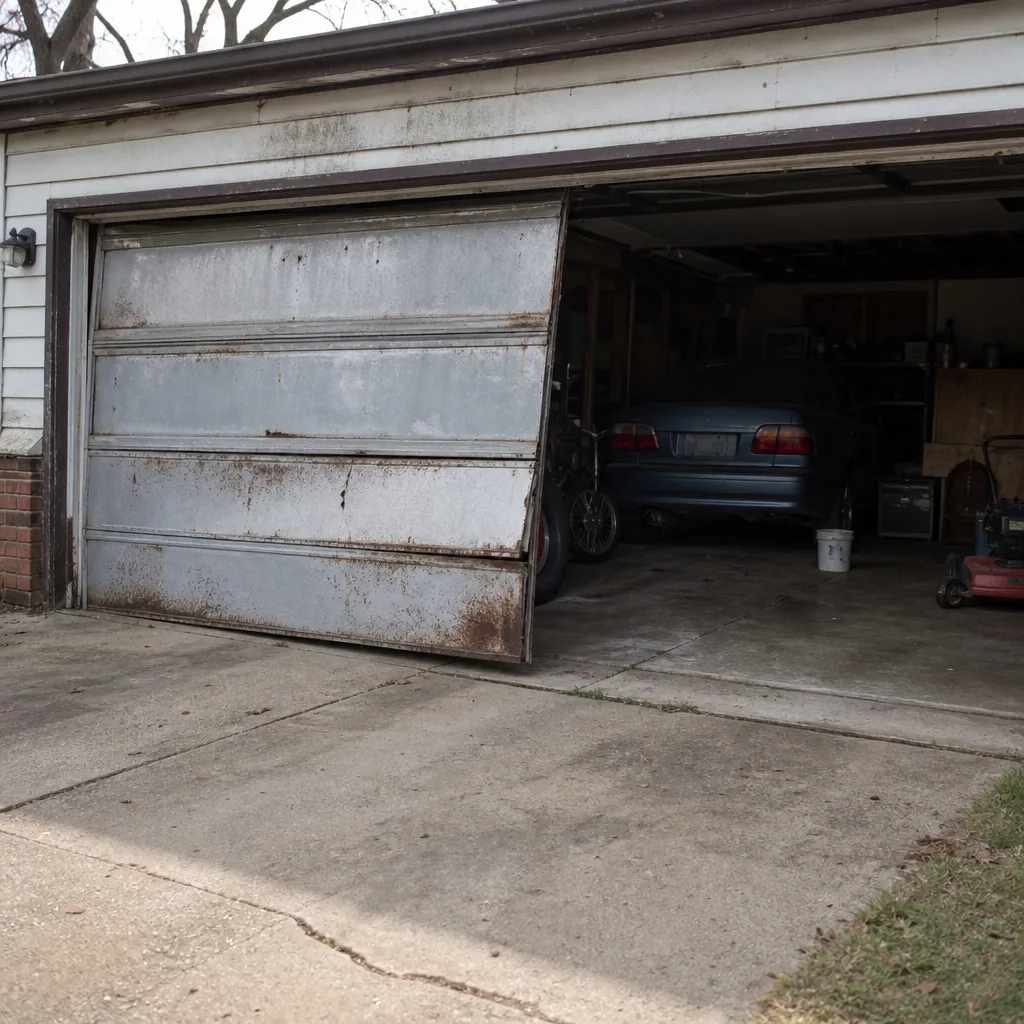 Before
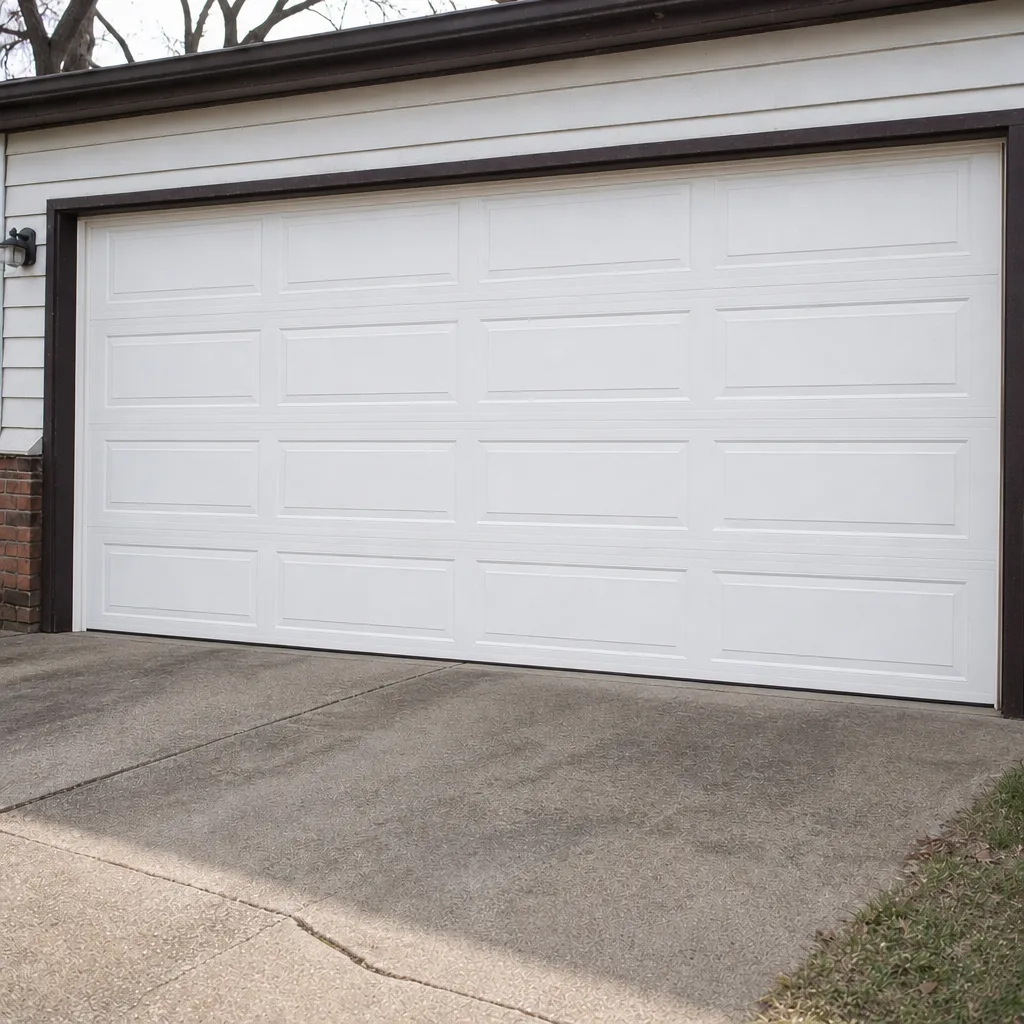 After
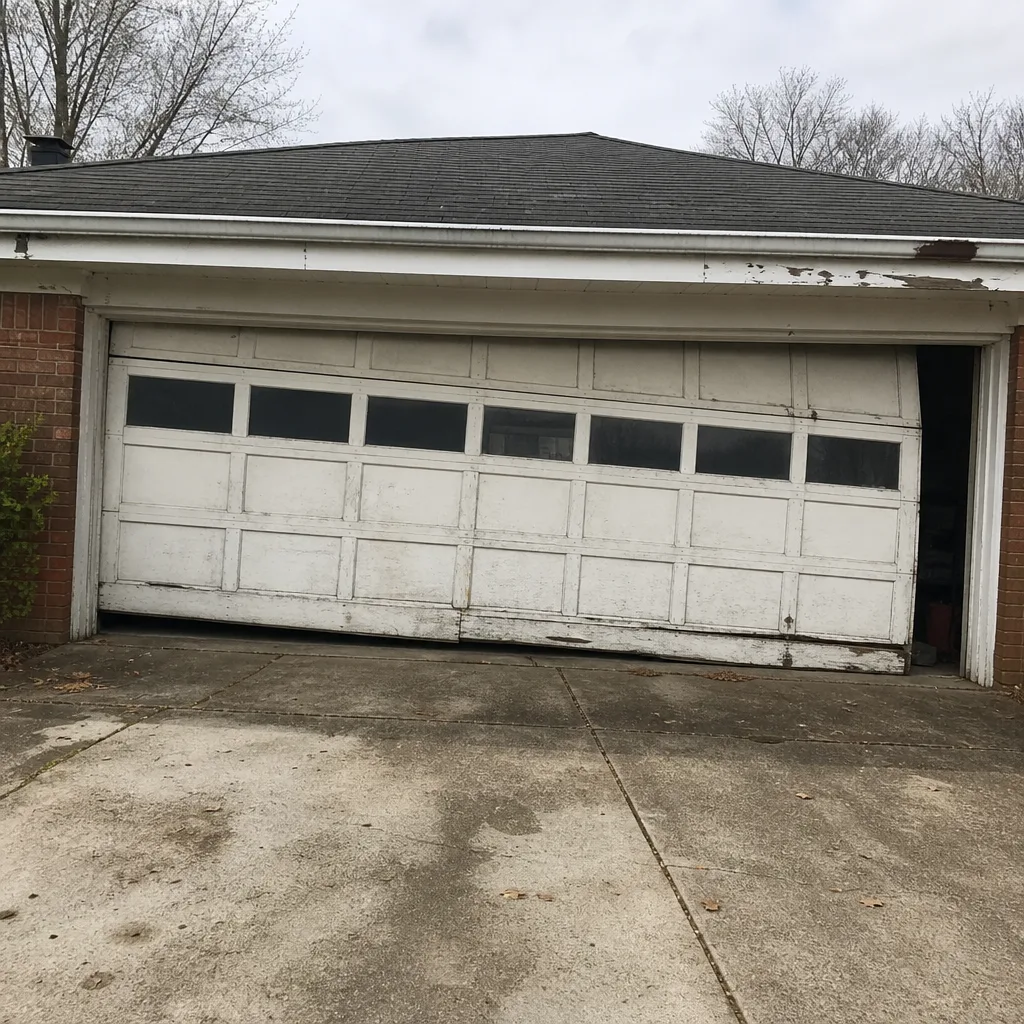 Before
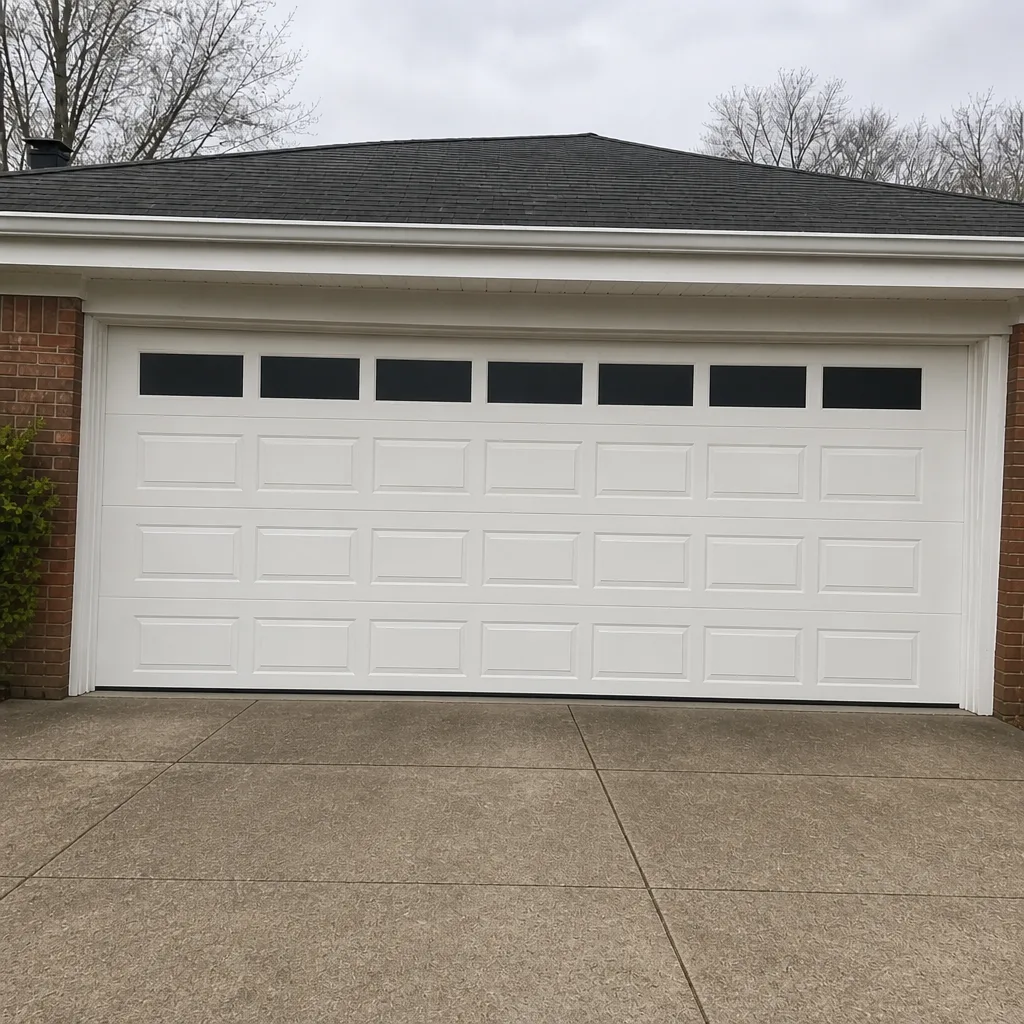 After
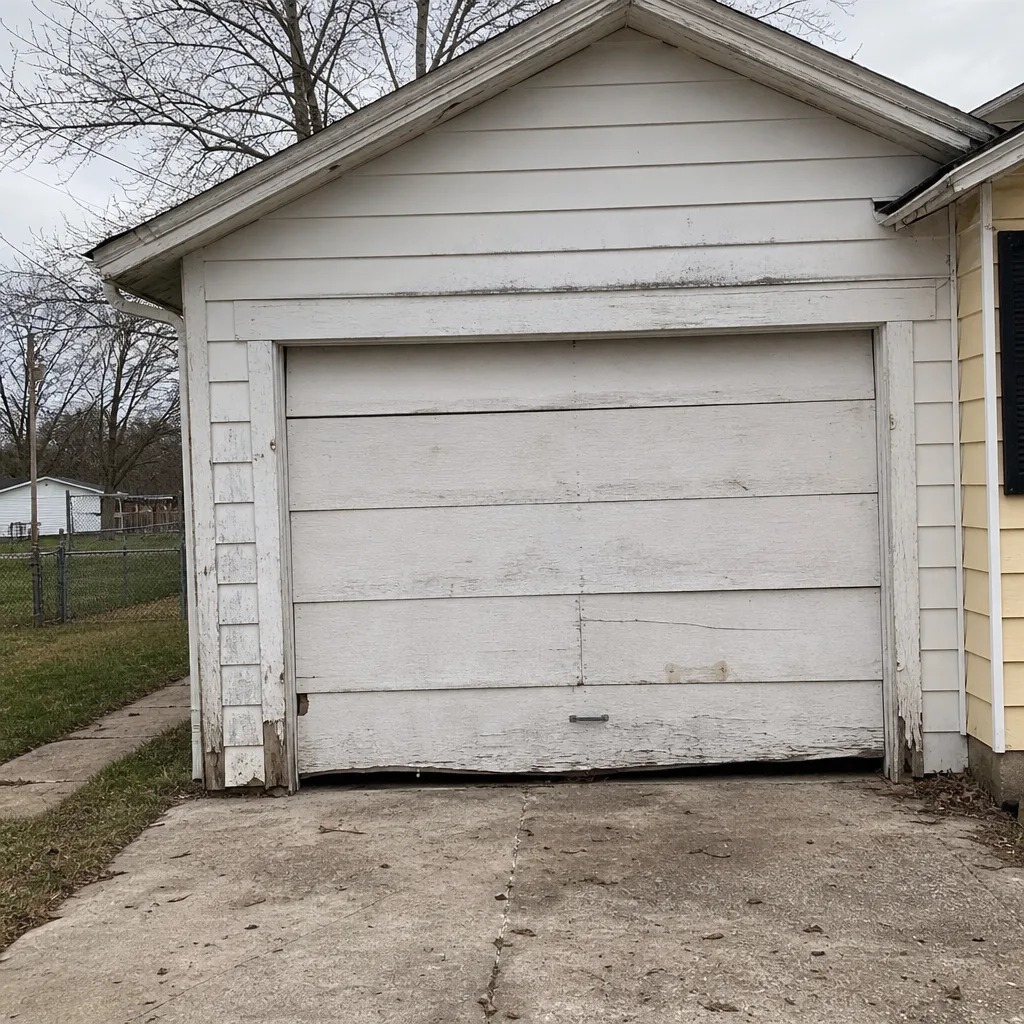 Before
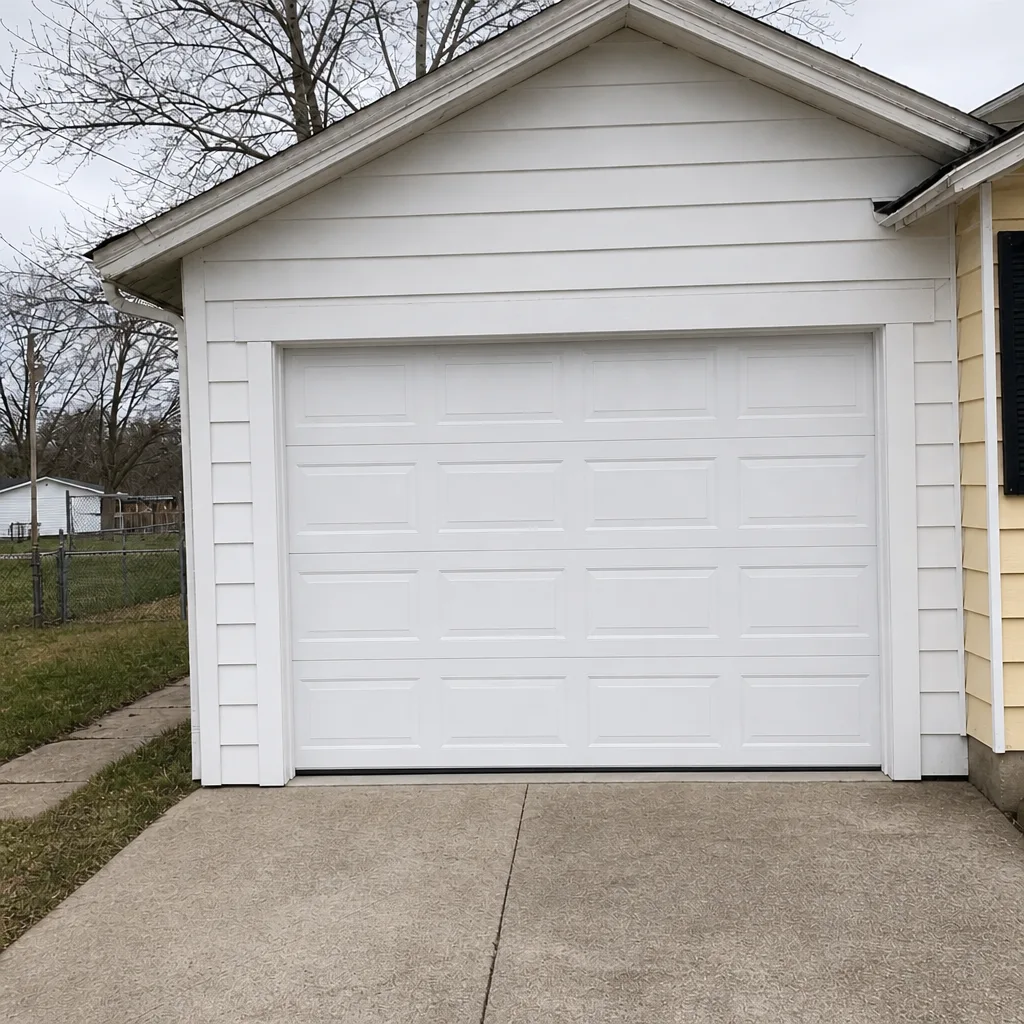 After
When to Call a Professional
Call a trained technician for anything that touches a torsion spring or the counterbalance cables, for anything that changes the framing around the opening, and for any job where the door is out of balance, crooked in the track, or refusing to reverse. Call if you’re planning a widening or a new opening, since that work needs a permit and a documented plan, and we can put that documentation together as part of a free estimate. And call if the job is a same-size replacement and you want a measured fit rather than a guess. Irvington Garage Door Repair Pros offers free estimates in Irvington. Call (833) 468-3082. We answer 24/7. Fast dispatch from 7am to 7pm, Sunday through Friday. The written estimate sets the price before any work begins, and we work on the brand you already have.
Frequently Asked Questions
Usually no. A same-size replacement on an existing opening in Marion County typically doesn’t require a building permit, and neither does a spring, opener or panel repair. You may still need historic district or HOA design approval, so check both. Call the City of Indianapolis Department of Business and Neighborhood Services if you want a definitive answer for your address.
When the structure of the opening changes. Widening or heightening an existing opening, modifying the header, cutting a new opening into a wall, or adding a new garage bay all generally require a building permit and at least one inspection. Altering the electrical circuit feeding the opener is also separate permitted work. If you’re unsure which category your job falls into, call (833) 468-3082 for a straightforward answer, and we’ll tell you what your job needs.
It can. Historic or preservation review typically covers the visible exterior of a building, and your garage door is often visible. Style, panel profile, material and color may all be reviewed, and the process is separate from the building permit. Ask the city whether your property is in a designated historic area, and ask your HOA whether architectural review applies.
It checks framing, header sizing and support, rough opening dimensions against the approved plan, garage-to-house separation on attached garages, and the safety features on any automatic opener, including the photoelectric sensors, reversal on contact, and manual release. It doesn’t check style or appearance. Style review belongs to the preservation body or the HOA.
It can. Unpermitted structural work is often flagged by a buyer’s home inspection, which starts a request for permits and sign-offs. Remediation typically means pulling a permit after the fact, opening up framing for verification, and sometimes correcting the work. That’s expensive compared to doing it right the first time. It’s also a disclosure question at the closing table.
We work on the major residential brands, and the door system’s track, springs and safety features have to be compatible as a set. We’ll look at what you have and let you know whether the system works as a whole. If a part isn’t right, our parts supply side usually has what’s needed, which keeps the timeline short. Call (833) 468-3082 to talk through the specifics before you buy.
The Bottom Line
Most garage door replacements in Irvington need no building permit, but the exceptions are specific: widening or raising an opening, altering a header, or cutting a new opening. Those trigger a permit and an inspection. Separately, historic district and HOA review can affect your door style even when no permit applies. Keep the two approval processes straight, check your opening dimensions before ordering, install openers to the manufacturer’s spec so safety-feature checks pass first time, and keep every document together for the day you sell. Leave springs and framing to a trained technician. For a measured fit and a written price, call (833) 468-3082 for a free estimate.
Written by the team at Irvington Garage Door Repair Pros.